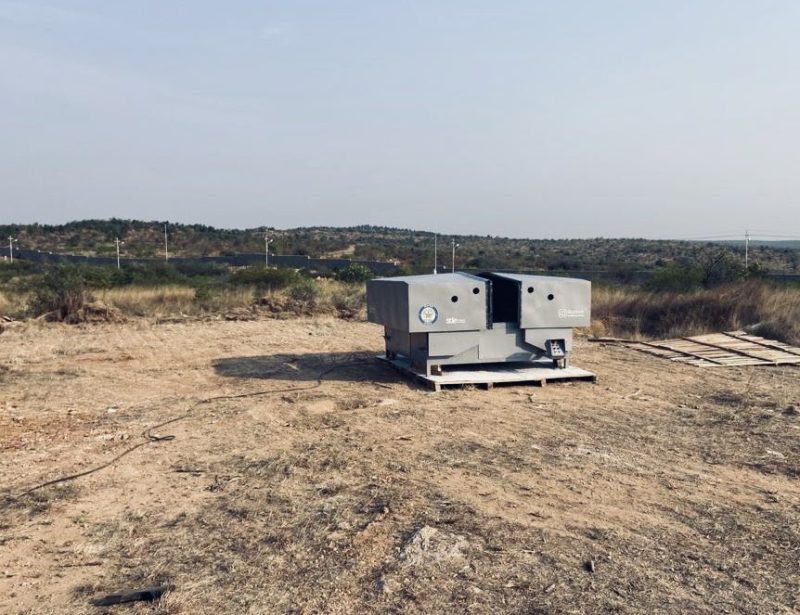
SkyDock started as a simple idea; What if a UAV was in a ready to fly condition 24/7? SkyDock was built to solve exactly this problem. A launching & charging station that keeps a UAV ready to fly, launches it at a moments notice, then starts charging it automatically when it lands.
I was a core R&D team member on this project, and my role covered the full electrical and electronic system, conceptualizing the prototype, designing the hardware, and writing the firmware that brought it all together. This meant designing the complete PCB set from scratch: a switching DC-DC converter, a battery management system, and a charging management system, each engineered to work perfectly with the other systems.
Beyond design, I owned the PCB assembly, BOM generation and procurement, and vendor negotiations for procurement, while leading a team of 3–4 engineers to take SkyDock from a prototype to a fully assembled, field-ready system.
The proudest outcome of this work: our contributions were granted a patent across five jurisdictions, the US, EU, Denmark, Australia, and Finland (US-11772819-B2). It is rare for hardware work to be recognized at that level, and it remains one of the milestones I look back on with the most pride.
Beyond SkyDock: Assembly & PCB Design
Parallel to SkyDock, I also built out our SMT assembly capability from the ground up, programming the pick-and-place machine, handling solder paste application, developing reflow profiles, and setting up inspection processes. This gave the team the ability to bring PCB production in-house rather than depending on external vendors for every build.
With that capability in place, I assembled PCBs for a range of critical UAV subsystems, flight controllers, power distribution boards, gimbal control systems and designed additional boards spanning power conversion, communication interfaces, and control modules. Each of these expanded what the team could build independently, and how fast we could iterate.